

 Français
 Español
 Products
 About Us



Quick Answer
An air transfer mattress is an air-assisted patient transfer device used to support lateral movement between surfaces, such as from a bed to a stretcher, operating table, or imaging table. It uses airflow to create a low-friction surface, which can help reduce manual pulling effort during patient transfer, depending on product design, patient condition, and facility protocol.
What Is an Air Transfer Mattress?
An air transfer mattress is a specialized patient transfer device designed to help move patients from one surface to another with less friction than manual repositioning alone. Common transfer scenarios include bed-to-stretcher, stretcher-to-hospital-bed, bed-to-imaging-table, and operating room lateral transfer.
The mattress is connected to an air supply unit. When inflated, airflow passes through the mattress and helps create a low-friction air cushion. This can make patient movement smoother and may help reduce caregiver pulling effort during transfer.
Air transfer mattresses are commonly used in hospitals, ICUs, operating rooms, imaging departments, emergency departments, and other care environments where patient lateral transfer happens frequently.
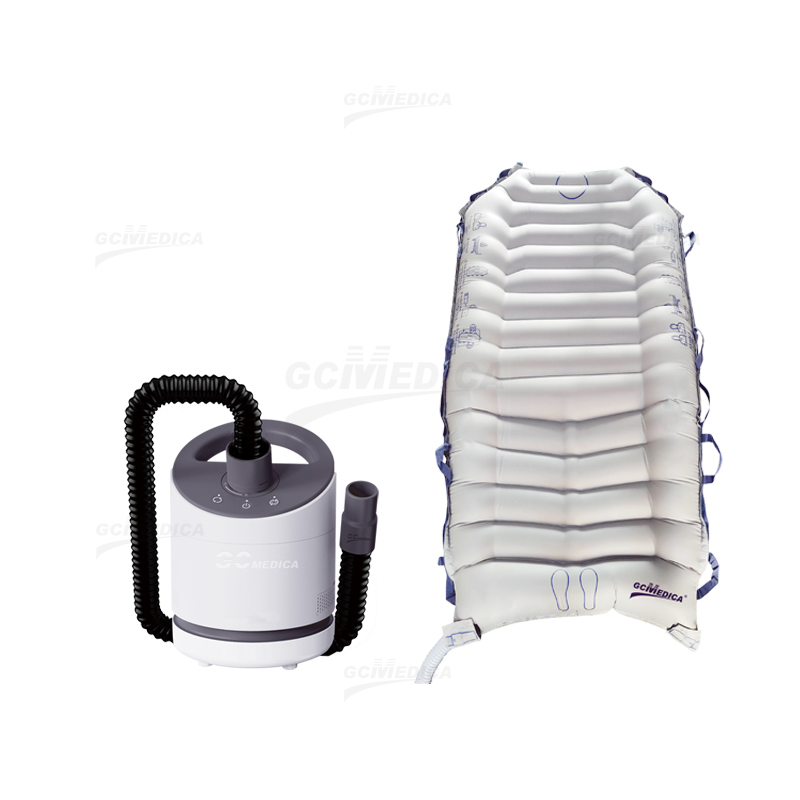 |
Tranquiglide Patient Air Transfer System > |
Common Uses of Air Transfer Mattresses
Air transfer mattresses are mainly selected for patient repositioning and lateral transfer situations where staff need a lower-friction transfer method. Typical uses include:
Patient lateral transfer: Moving a patient between two flat surfaces, such as a bed and stretcher, bed and operating table, or bed and imaging table.
Care for patients with limited mobility: Supporting transfer for patients who cannot easily move independently, including elderly, postoperative, bariatric, or low-mobility patients, depending on clinical assessment.
High-frequency hospital transfer: Helping departments manage repeated patient transfers in ICUs, ORs, imaging rooms, emergency care, and inpatient wards.
Caregiver workload reduction: Reducing the need for direct lifting or heavy pulling during transfer, which can support more ergonomic patient handling workflows.
Emergency and transport-related use: Supporting patient movement in emergency rooms, ambulances, or mobile care environments when compatible with the facility’s transfer protocol.
How to Use an Air Transfer Mattress
The exact operating method should follow the product instructions and the facility’s patient handling protocol. In general, the process includes the following steps:
Prepare the mattress: Place the air transfer mattress correctly on the transfer surface and check that the mattress, handles, air connection, and air supply unit are in good condition.
Position the patient: Carefully place or roll the patient onto the mattress according to the facility’s transfer procedure. Make sure the patient is aligned and supported before inflation.
Connect and inflate: Connect the mattress to the air supply unit and inflate it according to the product instructions. Confirm that the mattress is stable before starting the transfer.
Transfer the patient: Use the handles and follow team transfer protocol to move the patient laterally from one surface to another. Staff should monitor patient position and surrounding equipment during the movement.
Deflate and remove: After the transfer is complete, turn off the air supply, deflate the mattress, and remove or store the device according to the product type and cleaning requirements.
Clean or dispose: Reusable models should be cleaned according to the manufacturer’s instructions. Single-use components, if applicable, should be handled according to facility waste management rules.
Benefits for Hospitals and Care Facilities
For procurement teams, the value of an air transfer mattress is not only product comfort. It is also related to transfer frequency, staff workload, patient handling efficiency, and department workflow. Key buyer-focused benefits include:
Lower-friction transfer: Air-assisted movement can reduce resistance between the patient and transfer surface.
Improved transfer efficiency: Suitable for departments where patient transfer is frequent and time-sensitive.
Caregiver ergonomics: May help reduce manual pulling and lifting effort during lateral transfer.
Patient comfort during movement: The inflated air cushion can support smoother movement compared with direct manual transfer.
Flexible care settings: Commonly used in ICU, OR, imaging, emergency care, and general hospital transfer workflows.
Procurement scalability: Facilities can select reusable or single-use configurations depending on infection control requirements, budget, and use frequency.
Air Transfer Mattress Procurement Checklist
When comparing air transfer mattresses for hospital or distributor procurement, buyers should check practical product details instead of only comparing price.
| Selection Factor | What to Check |
|---|---|
| Product type | Reusable or single-use design, depending on facility protocol and infection control needs. |
| Size options | Compatibility with beds, stretchers, imaging tables, and operating tables. |
| Air supply compatibility | Whether the mattress works with the required blower or air supply unit. |
| Load capacity | Patient weight range and transfer requirements according to product specification. |
| Material and surface | Durability, comfort, cleaning requirements, and resistance to fluid exposure. |
| Packaging and documentation | Labeling, IFU, packaging configuration, and documents required by the target market. |
FAQ
What is the main purpose of an air transfer mattress?
It is mainly used to support lateral patient transfer between surfaces, such as bed-to-stretcher or bed-to-operating-table transfer.
Does an air transfer mattress replace clinical handling protocols?
No. It should be used according to the product instructions, facility protocol, and clinical judgment.
Is an air transfer mattress the same as a pressure relief mattress?
No. An air transfer mattress is primarily designed for patient movement and lateral transfer. A pressure relief mattress is mainly designed for ongoing pressure redistribution during bed rest.
What should buyers check before purchasing?
Buyers should check size, load capacity, air supply compatibility, material, cleaning requirements, packaging, and regulatory documentation according to market needs.
Conclusion
An air transfer mattress is a practical patient transfer solution for facilities that need to move patients between surfaces more efficiently. By creating a low-friction air-assisted surface, it can support smoother lateral transfer and help reduce manual handling effort when used according to product instructions and clinical protocol.
For procurement teams, the key is to match the mattress type, size, air supply unit, load capacity, and documentation requirements with the actual use environment, such as ICU, operating room, imaging department, emergency care, or general hospital transfer workflow.
Related Products